
Interiors & upgrades • 6 min read
Bathroom Renovations in the UAE: Balancing Style and Practicality
Plan a bathroom around the work you cannot see as carefully as the finishes you can. Review condition, waterproofing, drainage, product suitability and the practical handover.
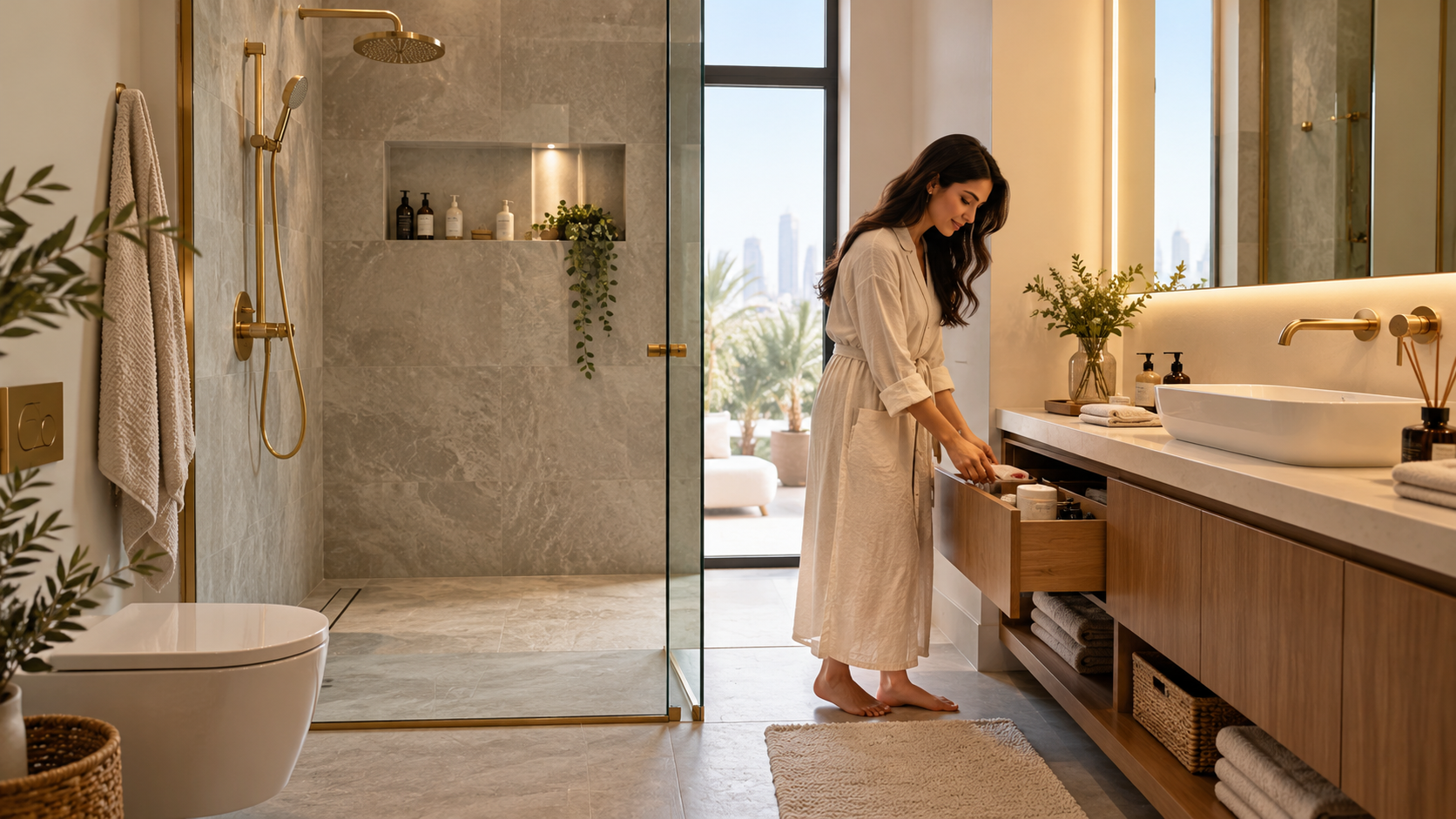
A new bathroom is easy to picture as a collection of finishes: a basin, a mirror, a favourite tile. The harder decisions sit behind and beneath them. A beautiful surface will not compensate for an unresolved leak, inaccessible maintenance point or shower arrangement that is awkward to use.
Begin with the existing room and the people who use it. Decide whether you are refreshing sound fittings or undertaking work that needs technical investigation and a coordinated installation. The distinction affects the brief, the programme and what you should ask a contractor to demonstrate before the room is handed back.
01Separate a cosmetic refresh from a technical problem
Write down what you want to change and why. Faded cabinetry, insufficient storage and a shower that leaks are different problems. Photograph visible staining, damaged joints or loose finishes and ask a qualified professional to establish the cause before deciding on a remedy. A new surface should not become a way of hiding an unresolved defect.
List what works well enough to retain. Keeping a sound arrangement may allow more attention to the items that matter most, such as usable storage or easier cleaning. Moving every fitting can introduce service and approval questions that a simpler scope avoids, although the existing condition must still be checked.
Confirm the applicable building procedures before demolition. If the bathroom is in an occupied apartment, discuss access, disruption and whether other facilities can remain usable. The apartment renovation brief helps organise responsibilities before a contractor starts.
02Ask how the hidden layers will work together
A tiled appearance does not establish that the entire shower assembly is waterproof. Schluter's technical discussion of shower waterproofing explains the importance of the connection between drainage and waterproofing. It is manufacturer guidance from the US, not a UAE approval or a requirement to choose that brand.
Ask your designer or contractor to specify the complete system appropriate to the project and local requirements. Who is responsible for the substrate, waterproofing, drainage connections and testing? Which inspections or records will be available before those details disappear beneath finishes?
Do not prescribe a test duration or construction detail from an unrelated online guide. The correct method depends on the approved design, product system and applicable requirements. What you can insist on is a clear explanation, appropriate professional responsibility and evidence that the specified checks were carried out. Keep those records with the project documents for future maintenance and any agreed warranty process.
03Test the layout with doors, towels and people in it
A plan should show how someone enters, closes the door, uses the basin, reaches a towel and steps into the shower. Check these movements with the actual proposed fittings. A generous-looking vanity can still leave a cramped passage once drawers or doors are open.
Consider all regular users. Discuss reach, preferred controls, seating or other access needs with the relevant designer or specialist. Avoid copying a standard dimension without checking the person and the applicable design requirements. Planning for easier use is more meaningful than adding a generic accessibility label to a drawing.
Think about the ordinary objects too: spare towels, cleaning supplies, toiletries and a place for clothing that stays out of the splash zone. The multigenerational home guide can help households agree whose needs must be reflected. Keep maintenance points reachable; concealed equipment still needs a practical way to be inspected and serviced.
04Compare the exact finish, not just the material name
Ask the supplier which surfaces are suitable for the intended wet or dry location, and request the relevant product information and test documentation. A broad description such as porcelain or stone does not tell you everything about a particular finish.
RAK Ceramics' high-performance tile information describes a specific anti-slip product technology. That illustrates why performance claims need to be tied to the actual product, rather than assumed for every tile made by the same manufacturer. Do not interpret a marketing description as a guarantee against slipping.
Review samples under the lighting planned for the room. Consider cleaning instructions, joints, edges and how replacement pieces would be sourced. Ask the installer how the selected format will work around drains, corners and changes of level. A pleasing sample is only one part of a finished floor or wall, and a drawing should show the details that the sample cannot.
Swipe or use arrow keys to view all columns.
| Decision | Evidence to request | Why it belongs early |
|---|---|---|
| Existing damage | Assessment and proposed remedy | Avoid concealing a continuing problem |
| Waterproofing and drainage | Coordinated specification and checks | Hidden work is difficult to revisit |
| Wet-area finish | Product suitability and test information | A material name is not a performance result |
| Fittings and storage | Dimensions and opening clearances | Daily use needs more than floor area |
| Maintenance access | Accessible service locations | Future repairs should remain possible |
05Give light, ventilation and cleaning their own brief
Describe how the room is used at different times. Morning preparation may require useful light around the mirror, while a late-night visit may call for a less intrusive arrangement. Ask the electrical designer to specify suitable fittings and locations for the bathroom conditions and local requirements. This is not a room for improvised wiring or unsuitable portable equipment.
Discuss ventilation with the responsible professional, including the existing system, controls and maintenance access. Do not cover grilles or redirect ducts because a rendering looks tidier without them. Ask how the finished installation will be checked.
For cleaning, look for places where dirt or water could be awkward to reach. Can a person clean behind or beneath the proposed fitting? Are product care instructions compatible with what the household will realistically do? A simpler detail that can be maintained may remain attractive longer than an elaborate arrangement nobody can comfortably access.
06Arrange a documented handover
Ask the contractor to explain the inspection and commissioning sequence before the project begins. At handover, check the agreed fixtures, finishes, controls and access points, and have the relevant trades demonstrate operation. Record outstanding items precisely rather than describing the whole room as unfinished.
Collect product manuals, warranties, approved specifications and records of concealed work and relevant testing. Confirm the contact and process for reporting defects. Check when the room can be used and cleaned according to the installed products' instructions; a finished appearance does not answer every curing or care question.
Finally, compare the result with the original purpose. Is the storage usable? Do doors and fittings work together? Has the original problem been investigated and resolved with appropriate evidence? Those answers are more useful than a vague assurance that the bathroom has been upgraded to a higher standard.
Sources
Research reviewed 30 October 2026. Publication dates and measurement periods are provided with each source.
- Schluter: shower waterproofing and drain coordinationManufacturer technical explanation checked 30 October 2026; US context
- RAK Ceramics: high-performance tile technologyProduct-specific manufacturer information checked 30 October 2026
Property costs, ownership and contract terms vary by home. Speak with Aliyas about the details relevant to your search.