
Property & lifestyle • 6 min read
Energy-Efficient Homes in the UAE: Comfort, Practicality and Lasting Appeal
Look beyond a green label. Examine the home's cooling, comfort, certification, measured consumption and maintenance needs to understand what efficiency could mean in daily use.
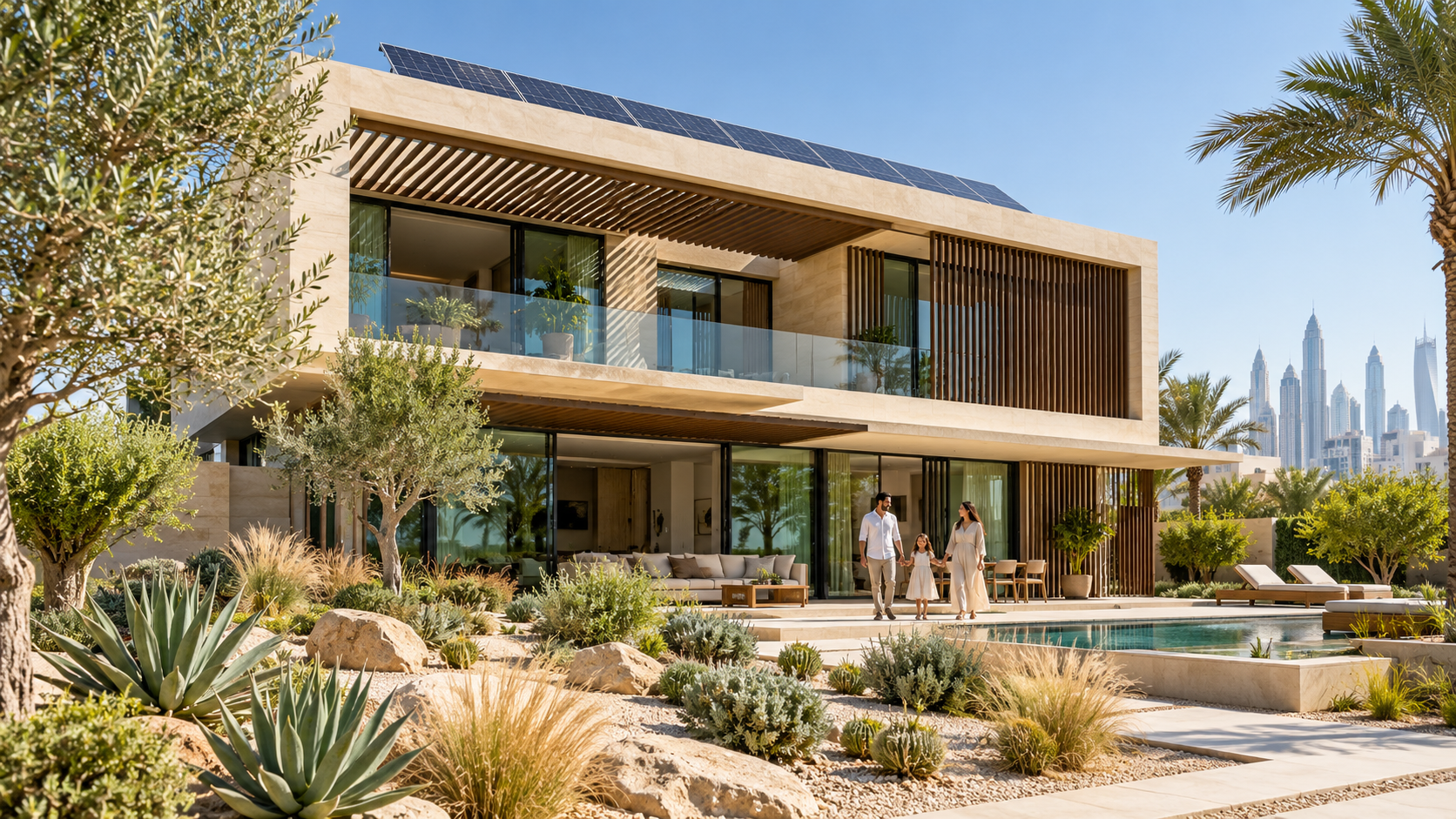
An energy-efficient home should be comfortable to live in and understandable to operate. A sustainability label can be a useful starting point, but buyers still need to know what was assessed, which systems serve the home and how the actual household will use them.
A low bill alone does not settle the question. It may reflect a smaller home, fewer occupants, time spent away or a different charging arrangement. The useful comparison brings the building, its operation and its consumption together, without turning a design promise into a guaranteed saving.
01Translate broad claims into evidence for this home
Begin with the features being claimed. Ask for the relevant specifications, assessment documents and operating information rather than accepting a general description of the wider community. A developer's sustainability ambition does not automatically establish the performance of every apartment or villa it builds.
For Abu Dhabi, the municipality's explanation of the Estidama Pearl Rating System distinguishes assessment during design and construction. Ask which stage and building a certificate covers. A design-stage result should not be described as measured household energy use after occupation.
Have technical details interpreted by an appropriate professional if they are central to your decision. The aim is not to collect the greatest number of labels. It is to understand which claims are documented, what remains to be delivered and which outcomes depend on operation or maintenance after handover.
Swipe or use arrow keys to view all columns.
| Claim | Evidence to request | What it does not establish alone |
|---|---|---|
| Certified building | Certificate, scope and assessment stage | Your future household bill |
| Efficient cooling | System specification and maintenance records | Comfort in every room under every condition |
| Low consumption | Comparable-period usage and occupancy context | That building design caused the entire difference |
| Smart controls | Installed functions and practical demonstration | Savings without suitable settings and use |
| Lower running costs | Complete charge structure and relevant bills | A guaranteed return on the purchase premium |
02Understand cooling and comfort together
Ask how cooling reaches the home, who maintains each part of the system and how it is charged. Establish whether relevant costs appear on the electricity bill, a separate cooling account or another statement. Comparing only one bill can miss part of the operating picture.
During a viewing, consider the rooms you will use most and the times you will use them. Ask about shading, glazing, controls, ventilation and any known comfort problems. A brief visit in mild weather cannot establish summer performance, so use documentary evidence and professional inspection where needed.
DEWA's electricity-conservation guidance recommends 24°C and automatic mode for summer air-conditioning use. Treat that as operating guidance, not a promised saving for a particular home. Comfort requirements and system suitability still need consideration, especially where the household has specific needs.
03Read consumption before drawing conclusions from cost
Collect enough information to compare like periods. Record electricity use in kilowatt-hours, the dates covered, occupancy and significant changes in use. A household away for several weeks is not directly comparable with one occupied throughout the period. Weather differences and changes to cooling arrangements also matter.
Separate consumption from the monetary bill. Tariffs, fixed charges, taxes and other billed items can affect the amount paid. A lower payment does not necessarily mean a proportional reduction in energy use, and the same consumption can produce a different total under a different charge structure.
For Dubai customers, DEWA Smart Living provides consumption monitoring, similar-home comparisons and alerts, including unusual use while away. Those tools can help identify questions worth investigating. Access household records through the appropriate account holder and permission process; do not assume a purchaser is entitled to another person's detailed usage history.
04Make savings calculations explicit
Consider an entirely worked example: annual electricity consumption of 18,000 kWh compared with 15,000 kWh over an equivalent later year. The difference is 3,000 kWh, or 16.67% of the starting figure. The example values show how upgrade costs and savings can be compared over time.
Even if those were measured readings, the calculation would establish a difference, not its cause. You would still need to investigate occupancy, weather, equipment, settings and other changes before attributing the reduction to a particular intervention.
To assess a proposed improvement financially, obtain a real installation quote, credible expected usage assumptions and the applicable charging structure. Include maintenance and replacement considerations. Do not pay a purchase premium solely because a marketing example presents an attractive payback period without showing how it was calculated.
How to calculate a consumption difference
| Item | Value |
|---|---|
| Sample starting year | 18,000 |
| Sample comparison year | 15,000 |
Unit: kWh per equivalent year
05Give maintenance and everyday operation a place in the plan
Efficient equipment still needs appropriate operation and care. Obtain the relevant manuals, warranty terms and service records, then ask qualified providers about a suitable maintenance schedule. Avoid altering shared systems or installing equipment without checking the necessary permissions and technical requirements.
Look for controls that the household can actually understand. A complicated interface is not an advantage if nobody knows how to use it, and a feature listed in a brochure should be demonstrated in the installed system where possible. Record settings and responsibilities so that a change of occupant does not erase the operating knowledge.
The property-management guide explains how to keep work orders, approvals and equipment history together. For efficiency, those records help distinguish a recurring fault from a change in use. They also support more informed decisions when equipment eventually needs repair or replacement.
06Choose lasting practicality rather than a fashionable label
An efficient home should still meet the household's needs for space, access and comfort. Buying more floor area than you can use comfortably does not become a practical choice merely because the building carries an environmental label. Consider the whole home alongside the long-term living checklist.
Before deciding, summarise the evidence in a few lines: what is certified, what is installed, what has been measured and what remains an assumption. Identify any extra price being paid for features and whether their value depends on savings, comfort, convenience or personal priorities. Those are different reasons and need different evidence.
Energy performance can contribute to a home's appeal, but future bills and resale outcomes remain uncertain. A sound choice rests on documented features, usable controls and a realistic operating plan. That makes the promise of a better home something you can investigate and live with.
Sources
Research reviewed 30 October 2026. Publication dates and measurement periods are provided with each source.
- Abu Dhabi City Municipality: Estidama design and construction assessment8 January 2025; assessment-stage explanation, not individual household performance data
- DEWA electricity management and conservation guidanceOfficial operating guidance checked 30 October 2026
- DEWA Smart Living consumption monitoringOfficial service features; page updated 10 March 2026, checked 30 October 2026
Property costs, ownership and contract terms vary by home. Speak with Aliyas about the details relevant to your search.