
Places & communities • 6 min read
Beyond the Skyline: Exploring the UAE’s Diverse Residential Communities
Look beyond a skyline or emirate name to understand how a community is planned, what is operating and whether its everyday rhythm suits your household.
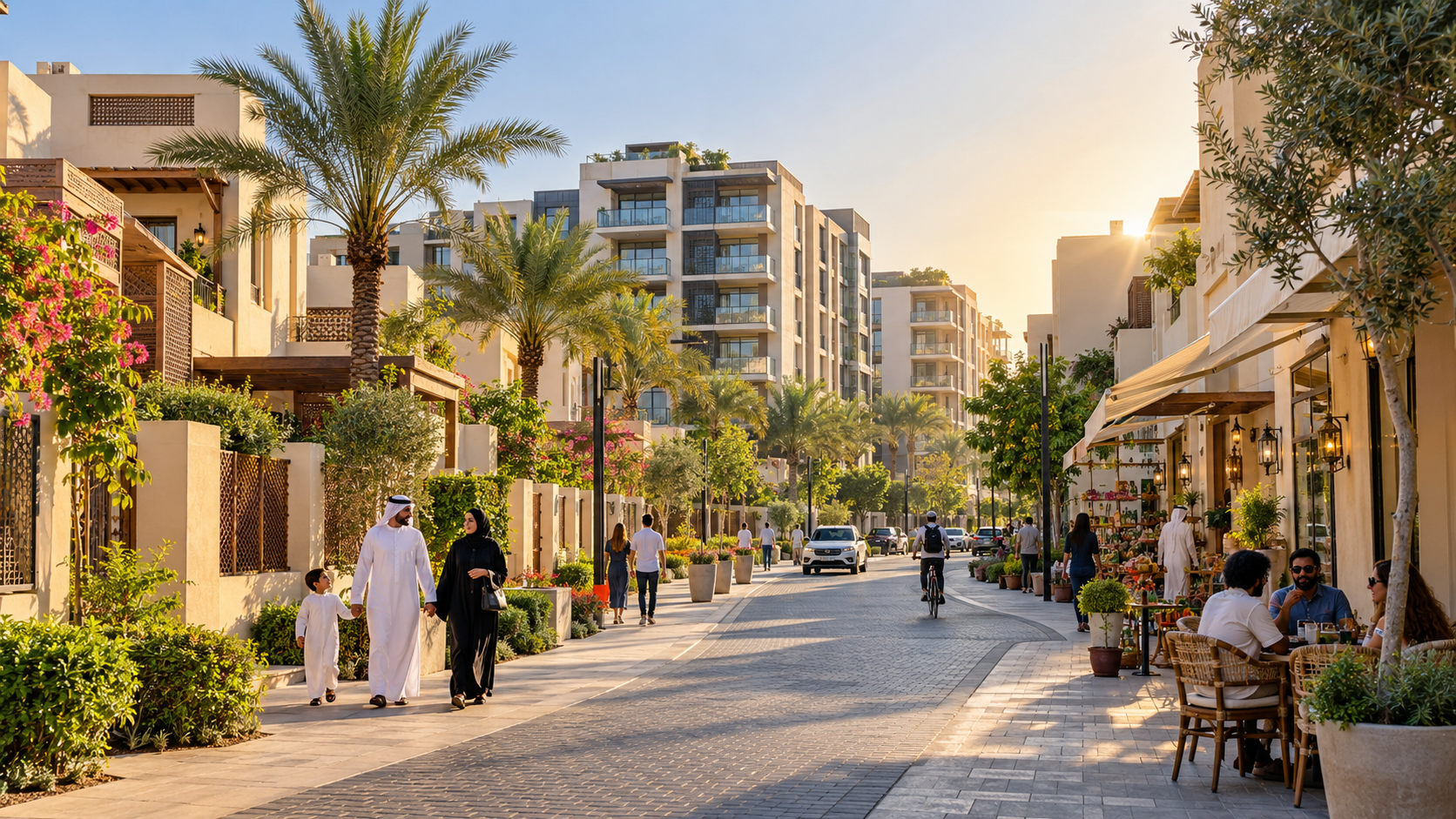
A skyline tells you remarkably little about the experience of coming home. It does not show the walk from parking, the distance to a useful shop or the way a neighbourhood changes between a weekday morning and an evening. Those are community questions, and they deserve their own place in a property search.
The UAE offers different residential settings within the same emirate, sometimes within the same wider development. Instead of sorting homes only by city and budget, investigate the community model: what brings people there, how they move around and which parts of the promised experience exist today.
01Search at four levels, not just one
The emirate provides regional context. The community shapes access and nearby uses. The development phase determines what surrounds the home during occupation. The particular building or unit determines layout, condition and management responsibilities. A useful shortlist follows all four levels.
Two homes in a well-known community can have very different relationships to traffic, amenities and construction. Conversely, homes in different emirates may meet a similar household brief. Comparing only community names can hide both possibilities.
Write the address and phase beside every attractive claim. If a listing says a park is nearby, find the actual route and confirm the right to use it. If it highlights a future retail area, identify its status. This turns a broad lifestyle proposition into a set of facts that can be checked without dismissing the appeal that first attracted you.
02Recognise different community propositions
Primary descriptions show how varied the propositions can be. Masdar City's residential directory presents resource-efficient design and neighbourhood amenities, while separately listing third-party residential developments. Arada's Masaar overview places woodland, walking and cycling at the centre of its community concept.
Expo City's description of Expo Downtown sets out a district bringing homes, business and cultural activity together around a pedestrian-focused setting. These are the organisations' own descriptions of their communities. They are useful for understanding intent, not an independent inspection of every property or confirmation that all announced features are complete.
The practical question is how each proposition connects with your routine. A greener setting, proximity to work or a lively public realm can each be valuable. Ask for the property’s sustainability certification and review the supporting documentation alongside its costs.
Swipe or use arrow keys to view all columns.
| Community proposition | Potential household benefit | Property-level check |
|---|---|---|
| Resource-conscious neighbourhood | A setting designed around efficient living | The specific building's systems, documentation and actual bills |
| Landscape-led residential setting | Outdoor space and routes for recreation | Access, operating facilities and maintenance responsibilities |
| Mixed residential and business district | Several daily activities closer together | Actual journey, noise, delivery access and operating hours |
| Established urban neighbourhood | An existing network of local services | Condition, management and suitability of the exact street |
03Distinguish a mature setting from a developing one
An established neighbourhood allows more direct observation. You can inspect functioning services, see how shared areas are maintained and test the normal journey. That does not remove the need to review building condition or future works, but it changes the evidence available to you.
A developing community requires another layer of questions. Which access routes and facilities are part of the relevant delivery phase? Which depend on later projects? What is the proposed arrangement if essential services are not ready when the home becomes available? Obtain the documents and ask for written clarification where a commitment matters.
Neither maturity nor newness is an automatic verdict. A newer home might meet a household's needs well, while an older neighbourhood might offer the desired routine immediately. The long-term living guide helps identify which benefits need to exist from the first day and which can remain optional.
04Investigate who looks after the shared experience
Landscaping, lifts, access systems, parking areas and shared leisure facilities need ongoing attention. Ask who is responsible for the elements you expect to use and how their costs are funded. A polished sales presentation does not explain the operating arrangements after purchase.
Review the available charge information, maintenance records and rules relevant to the property. Clarify the boundary between responsibilities attached to the individual home and those managed collectively. For an off-plan purchase, distinguish a budget estimate from an actual operating history.
Also consider how problems are reported and resolved. Find out whether the owner has a clear contact, what evidence exists of routine upkeep and whether promised access is documented. These enquiries are not a claim that a particular community is poorly managed. They are a way to understand the service behind the lifestyle and the obligations that continue after the keys are handed over.
05Test whether the public realm works for you
Walk the routes you expect to use. A park visible from a balcony may require a circuitous trip; a shop that looks close on a plan may sit beyond an inconvenient crossing. Check the pedestrian route, entrances, shade and accessibility for the household rather than relying on straight-line distance.
Visit at more than one relevant time. Observe the relationship between residential entrances, restaurants, deliveries, recreation and traffic. A lively environment can be a benefit or an inconvenience depending on the home's position and your schedule. Avoid deciding on an entire district from one favourable photograph.
Bring practical constraints into the visit. Someone using a pushchair, wheelchair or mobility aid may experience a route differently from a fit adult travelling alone. Work out whether the attractive shared spaces can become part of ordinary life, not merely places you appreciate in the brochure.
06Build a shortlist around a repeatable brief
Choose a small number of settings that could meet the same household needs. For each, record the essential journeys, usable home, operating facilities, costs and unresolved questions. This allows a landscape-led community to be compared fairly with an urban address without pretending they offer identical experiences.
Use the waterfront, city and suburban comparison to examine those trade-offs. Keep the ownership interest, buyer eligibility and intended use as separate matters for local verification. A community's appeal does not settle the legal or financial case for a specific transaction.
The result should be a shorter, better explained list. You should know why each address remains, which claims have been checked and what could rule it out. That is a more useful discovery process than trying to crown one emirate or community the best place for every buyer.
Sources
Research reviewed 30 October 2026. Publication dates and measurement periods are provided with each source.
- Masdar City residential community and building directoryOfficial community description checked 30 October 2026; individual building claims not generalised
- Arada's official Masaar community overviewDeveloper description checked 30 October 2026; operating status requires phase-specific verification
- Expo City Dubai's official Expo Downtown district descriptionOfficial district plan checked 30 October 2026; future features distinguished from delivered facilities
Property costs, ownership and contract terms vary by home. Speak with Aliyas about the details relevant to your search.