
Property & lifestyle • 5 min read
Industrial and Logistics Property: Exploring Another Side of UAE Real Estate
Industrial property begins with the operation it must support. Investigate access, technical capacity, permitted activities and lease obligations before interpreting a logistics growth story.
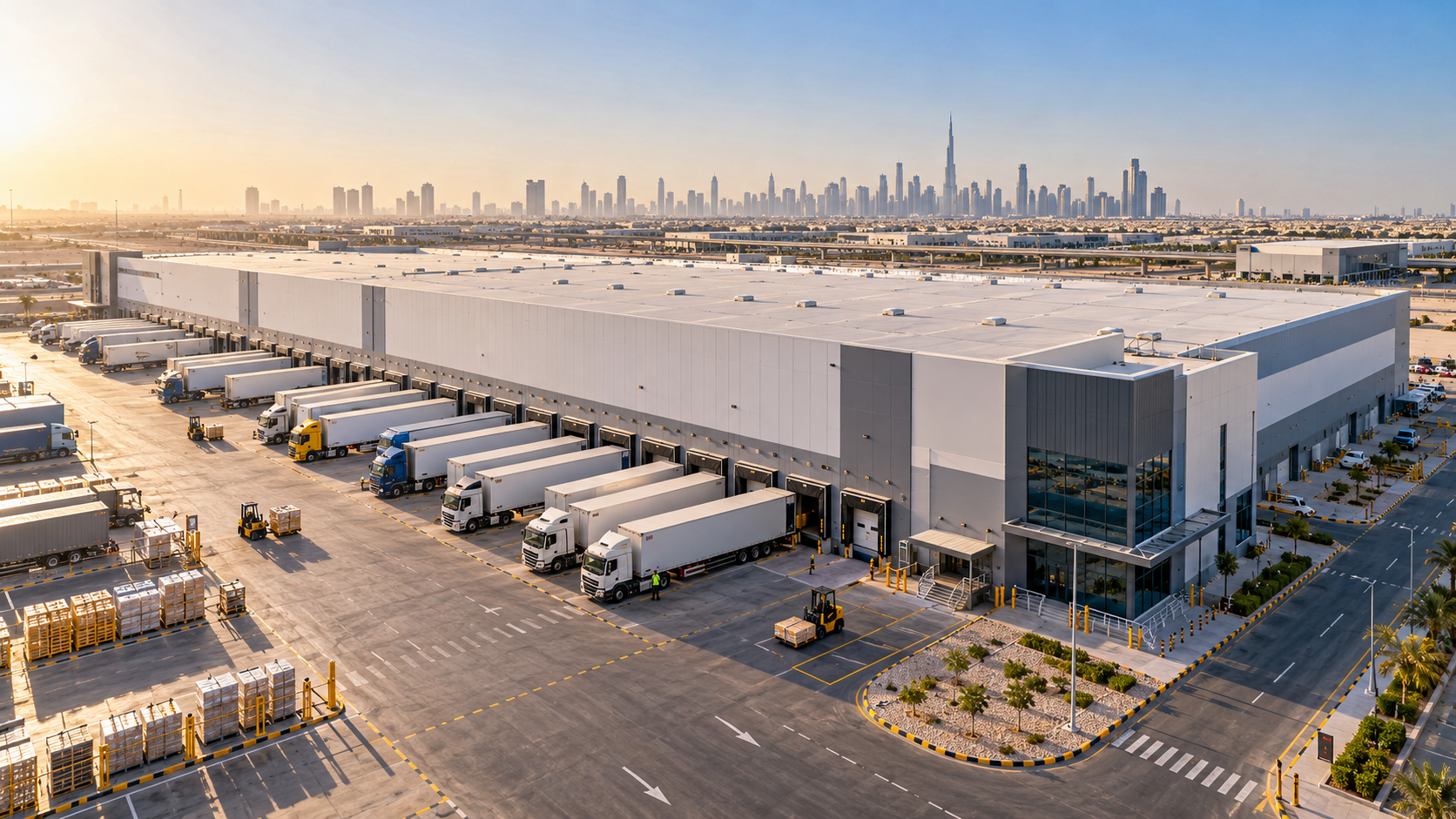
A warehouse can look straightforward from outside and still be unsuitable for the business that needs it. The decisive details may be the loading arrangement, power supply, floor specification, permitted activity or the route a truck must take to reach the building.
That makes industrial and logistics property a specialised investigation. Demand for moving and storing goods can create opportunities, but a broad trade story does not establish the rental prospects of an individual facility. Begin with the operation, then evaluate the property and the contract that allow it to function.
01Describe the operation before looking at the building
Ask what enters the facility, what happens to it and how it leaves. Storage, assembly, distribution and temperature-controlled handling can require different layouts and systems. A generic warehouse label does not establish that all those activities are possible.
Record the goods, expected throughput, vehicle types, working hours and staffing arrangements. Include the space needed for movement, staging and safe access rather than counting every square metre as storage. The resulting operational brief should be reviewed by people qualified to assess the activity.
This approach also helps an investor understand the relevant occupier pool. A building suited to a narrow specialist use may have different reletting prospects from more adaptable space. Neither is automatically preferable; the purchase price, lease, conversion cost and evidence of demand must explain the choice.
02Inspect technical capacity rather than relying on area
KEZAD's official pre-built facility information distinguishes standard warehouses, light-industrial units and cold-store-convertible options. The distinctions illustrate why the operating specification matters. They do not confirm that any particular unit is currently available or suitable for a proposed business.
Have the relevant professionals review clear heights, floor loading, power, ventilation, fire and life-safety systems, loading access and other requirements of the activity. Compare documentary specifications with the actual unit and any intended fit-out. Do not infer capacity from an attractive exterior or an adjacent occupier's operation.
A conversion can involve more than equipment installation. Establish what work, approvals, time and capital would be needed before assuming a facility can support a different use. An apparently inexpensive building can become a costly option if the practical operating requirements have been left out of the comparison.
Swipe or use arrow keys to view all columns.
| Requirement | Evidence to obtain | Question for the assessment |
|---|---|---|
| Goods and activity | Operating brief and permitted-use documents | Can this activity take place here? |
| Storage and handling | Layout, heights and floor specifications | Can the proposed system operate safely? |
| Vehicle movement | Loading plan and route review | Can the actual vehicles reach and use the site? |
| Utilities and systems | Capacity records and technical inspection | What upgrades or approvals are necessary? |
| Lease and fit-out | Agreement, specifications and exit obligations | Who funds work and restores the space? |
03Separate property rights from business permissions
Confirm the interest being acquired or leased, its term, transfer conditions and the authority responsible for the location. Then confirm the business activity, licensing and any specific permissions required. A right to occupy a building is not, by itself, proof that every industrial process may be carried out there.
KEZAD's facility information also distinguishes domestic economic-zone and free-zone arrangements. That is a prompt to investigate the relevant operating structure, not a reason to assume one arrangement suits every company or produces the same trading rights. Obtain advice for the actual business and transaction.
Review environmental, safety and insurance requirements with appropriate specialists. Keep the resulting obligations in the operating budget and timetable. These checks should happen before a lease or purchase is justified by anticipated revenue, because an unusable facility cannot be rescued by an attractive headline rent.
04Read trade evidence without turning it into a rent guarantee
In its first-half 2026 company announcement, DP World reported a Jafza customer base of 11,654, versus 11,119 in the prior-year period. The same release described reduced vessel traffic at Jebel Ali during the conflict. Business-base growth and disrupted trade flows can therefore exist together.
The customer count is not occupied warehouse area, signed leases for your unit or proof of rental growth. The port discussion likewise should not be converted directly into a percentage change in the value of every industrial property. Each measure has a different scope.
For a specific facility, investigate the relevant business users and competing space. Ask how its operating advantages hold up when routes, volumes or delivery schedules change. The business-demand guide helps separate broad economic evidence from the more detailed case a property needs.
Jafza customer base reported in DP World's half-year results
| Item | Value |
|---|---|
| Prior-year period, 2025 | 11,119 |
| First half, 2026 | 11,654 |
Unit: Customers, half-year reporting dates
05Model the cost of becoming operational and leaving
Include acquisition or leasing costs, technical work, approvals, insurance and the time before the facility can be used. A quoted rent without the necessary fit-out and connection work is not yet a complete occupancy budget. Obtain written scope and responsibility information.
For an investment, review the tenant agreement and its payment, maintenance and reinstatement obligations. Identify which improvements belong to whom and what condition the property must be returned in. A substantial tenant fit-out can be useful, but it should not automatically be counted as enduring value for the next occupier.
The office-property guide discusses similar lease-economics questions, although industrial facilities need their own technical assumptions. Test vacancy and adaptation costs rather than relying on uninterrupted income. The ability to fund a transition between users can be as important as the first year's rent.
06Select a facility you can explain at operational level
A credible case should identify the intended user, the technical fit, the permissions, the access arrangements and the cost of maintaining or adapting the building. If those points remain unclear, a broad logistics-growth headline is not enough to complete the investment analysis.
Review the location against real movement patterns. Test the relevant vehicle route and investigate operating constraints through the appropriate sources. A short map distance to a port or motorway does not describe every step of a delivery.
Industrial property can offer exposure to a different set of economic activities from housing, but it also introduces specialised responsibilities and risks. The useful opportunity is a facility that solves a documented business need on workable terms. That conclusion requires operational evidence, not simply enthusiasm for the sector.
Sources
Research reviewed 30 October 2026. Publication dates and measurement periods are provided with each source.
- KEZAD official pre-built warehouses and industrial facilitiesProduct categories and jurisdiction descriptions checked 30 October 2026; no current inventory assertion
- DP World H1 2026 issuer announcement distributed through RNS13 August 2026; six months ended 30 June 2026 and prior-year comparison. Issuer text, not the host's AI summary
Property costs, ownership and contract terms vary by home. Speak with Aliyas about the details relevant to your search.