
Long term thinking • 5 min read
How UAE Infrastructure Investment Supports the Long-Term Property Story
Infrastructure matters when it changes the journeys and services a household actually uses. Separate operating connections from future plans, then investigate the last part of the journey.
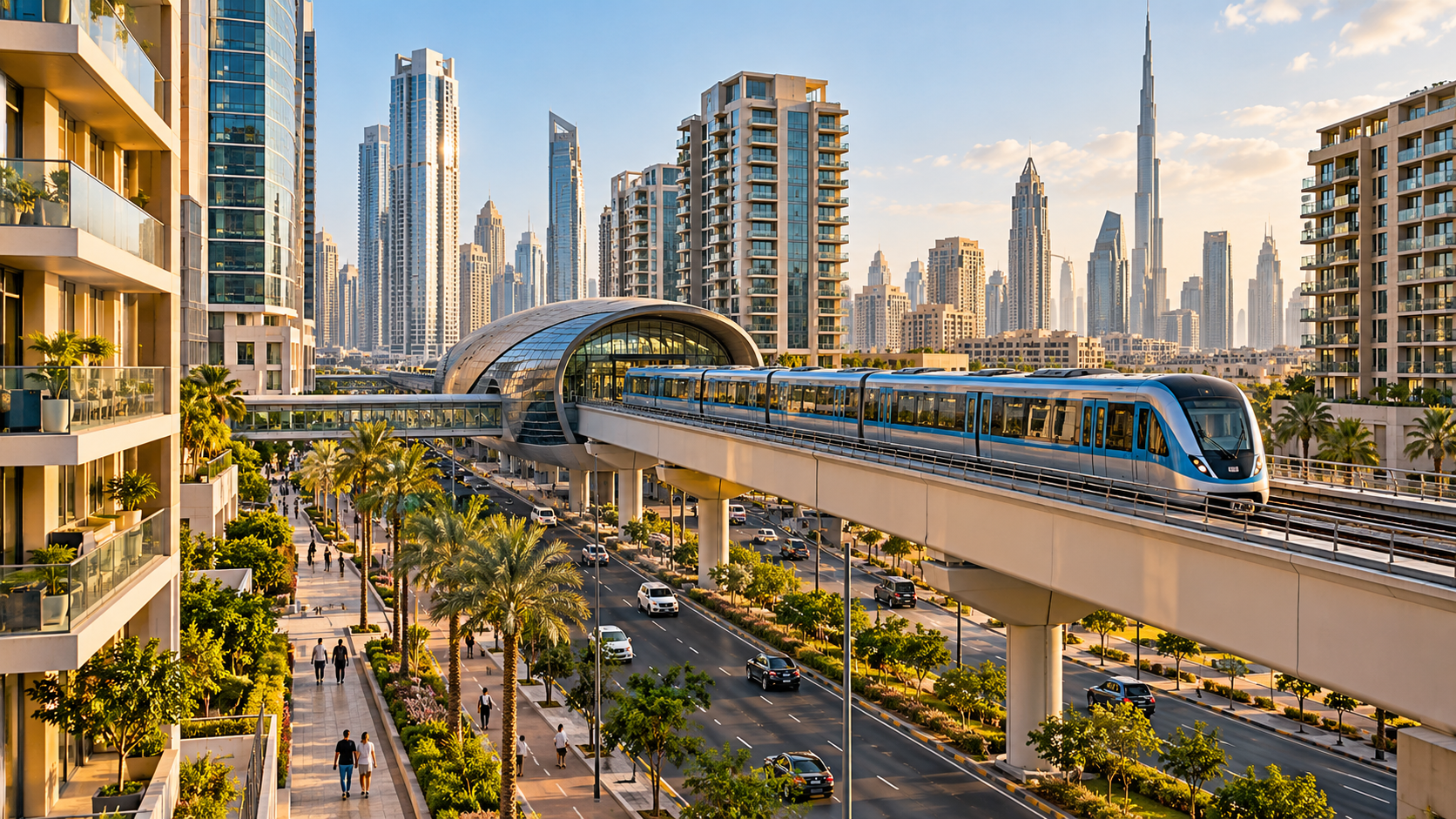
A new railway or road can change how a city works. For a homebuyer, however, the useful question is smaller and more specific: what will this connection allow me to do from this address? A station on a regional map and a convenient journey from the front door are different things.
The UAE's infrastructure story includes services already operating and projects still being built. Understanding the distinction helps buyers recognise practical benefits without paying for a future outcome as though it were certain. The strongest location case connects official project information with the household's actual routine.
01Put every connection on a dated timeline
Begin with the transport authority or operator, and record what its latest information actually establishes. An announced route, a construction milestone and a passenger service are different stages. Do not combine them into a single statement that an area is already connected.
RTA's Blue Line project information describes a planned 30 km route with 14 stations and a 2029 opening target. Those are project specifications and a target date, not evidence that a buyer can use the line today.
Keep the date of the information beside the expected benefit. If a purchase depends on a future connection, examine how the location would function before opening and if the timetable changes. An investment explanation should survive that question without quietly replacing today's access with tomorrow's proposal.
02Distinguish a national network from a daily commute
Etihad Rail's passenger information, checked on 30 October 2026, describes operating connections between Abu Dhabi, Dubai, Al Dhaid and Fujairah, with further stations planned. That is meaningful transport evidence, but it does not establish the convenience of every home in those places.
For a household, investigate the relevant station, available services and the onward journey. A train can be useful for occasional family visits without matching a particular work schedule. Equally, a location may become more attractive to someone who travels regularly between specific destinations.
Use the operator's current booking and timetable information when planning a real trip. Do not treat a published train journey time as the time from your home to an office. Parking, walking, waiting and onward travel belong in the same calculation. The benefit is personal to the route and routine, rather than a universal percentage added to property value.
03Investigate the last part of the journey
Walk the route from the building entrance to the relevant transport stop where practical. Check crossings, shade, gradients, lighting and access arrangements. A short distance on a map can conceal an inconvenient road crossing or a route that is uncomfortable at the time you need to use it.
Then repeat the exercise at the destination. The train or bus may cover most of the distance while leaving a difficult final connection. Include that connection when comparing neighbourhoods rather than awarding every home near the same station an identical accessibility score.
The waterfront, city and suburban living guide treats travel as part of a wider household routine. Use the same approach here. Consider groceries, school journeys and appointments as well as commuting, because a useful location needs to support the week rather than one impressive trip.
Swipe or use arrow keys to view all columns.
| Question | Evidence | Decision it informs |
|---|---|---|
| Is it operating? | Dated operator or authority information | Whether the benefit exists now |
| Does it serve my journey? | Current route, stops and timetable | Whether it fits the actual routine |
| Can I reach it comfortably? | Entrance-to-stop route inspection | Whether nearby also means accessible |
| What remains unfinished? | Phase plan and current site conditions | How the first years of ownership may feel |
| What am I paying for? | Comparable homes and stated assumptions | Whether the price relies on future delivery |
04Include everyday infrastructure beyond transport
A home also depends on services that receive fewer headlines: utility connections, drainage, digital connectivity, public space and access for deliveries or emergency response. Investigate the services relevant to the particular building and phase instead of assuming they are complete because a nearby district is established.
Ask who is responsible for any unfinished works and what documentation supports the expected sequence. Distinguish infrastructure serving the home from amenities that may belong to a later phase or another operator. A school site on a plan does not establish an opening date or a place for a child.
For an occupied community, inspect how these systems function together. For a future community, record the evidence and the remaining dependencies. This is not an argument against new development; it is a way to understand what you are buying at the point when you expect to live there.
05Balance future convenience against the transition period
Infrastructure delivery can involve works, changed routes and temporary inconvenience before the lasting benefit arrives. Ask about the current site conditions and the access arrangements affecting the property. Do not infer the impact on a particular home solely from a broad construction map.
Compare the first years of ownership as well as the eventual completed setting. A household with immediate access needs may reach a different decision from someone whose intended use begins later. The same location can be sensible for one timetable and unsuitable for another.
The mixed-use community guide makes a related distinction between a coherent final plan and the experience of an individual phase. Keep both in your comparison. If the location only works after several separate projects finish, identify each dependency instead of treating them as one assured event.
06Connect the benefit to the price with restraint
Infrastructure can broaden the ways a location is used, but it does not guarantee a particular rent, resale price or rate of appreciation. Purchase price, competing supply, building quality and household preferences still matter. An attractive future story can already be reflected in the asking price.
Compare the home with alternatives using the same evidence standard. State which advantages are available now, which are planned and which are your own assumptions. Avoid adding an unsupported premium simply because a transport project is large or well publicised.
A useful infrastructure thesis is specific enough to test: the journey improves, the timing fits, the route works and the financial commitment remains manageable if delivery changes. That is a more durable basis for choosing a home than expecting a major announcement to do all the investment work.
Sources
Research reviewed 30 October 2026. Publication dates and measurement periods are provided with each source.
- RTA Dubai Metro Blue Line project informationSpecifications and target opening checked 30 October 2026; no current completion-percentage claim
- Etihad Rail passenger network and planned expansionOperating network and future phases as described on 30 October 2026; check timetables for actual travel
Property costs, ownership and contract terms vary by home. Speak with Aliyas about the details relevant to your search.