
Buildings & amenities • 5 min read
High Floor or Low Floor? Choosing the Right Apartment Level in the UAE
A higher floor is not automatically a better home. Compare the actual outlook, access, privacy and daily routine before deciding what height is worth to you.
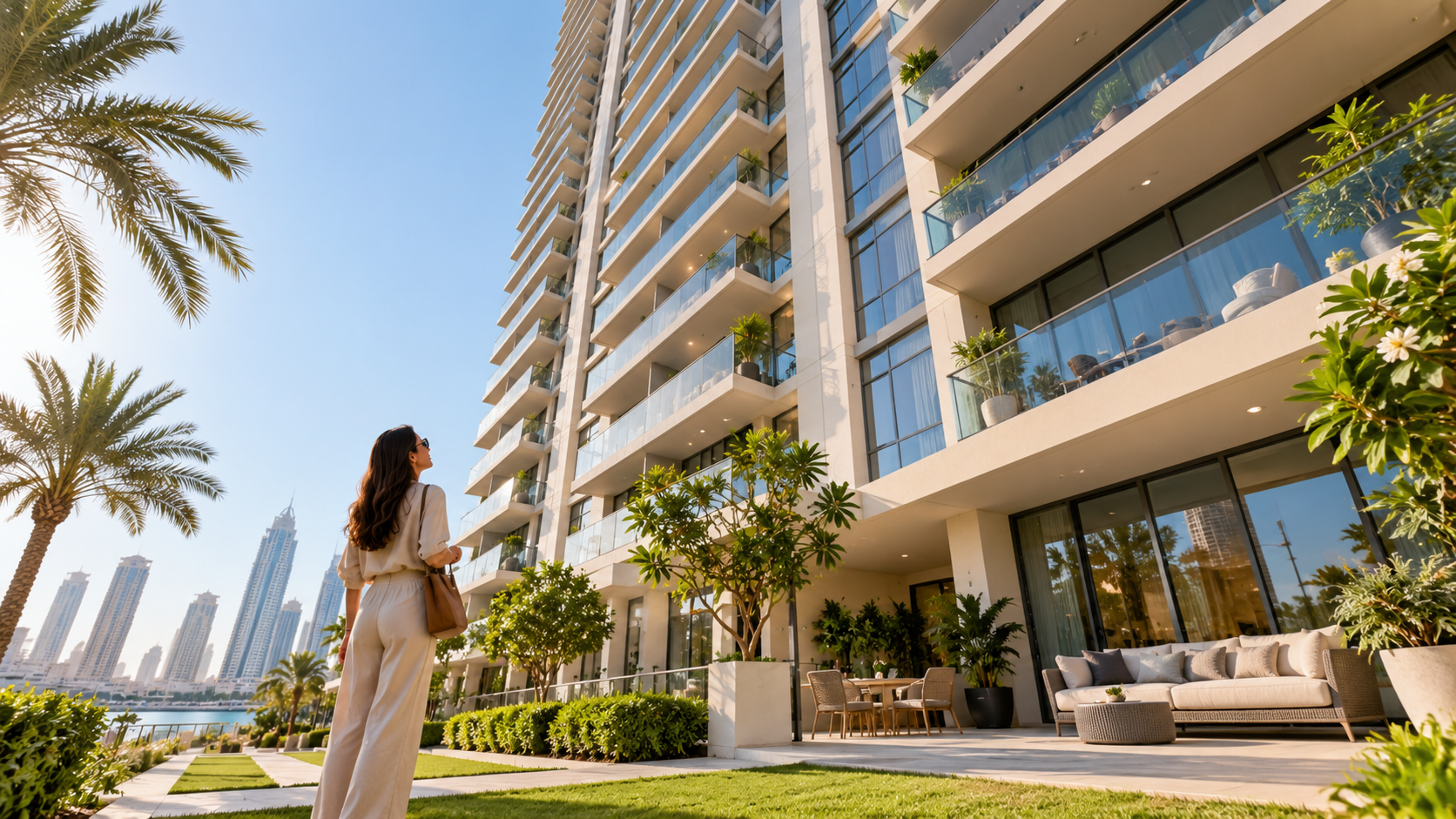
The apartment on the higher floor has the view you imagined. The one below feels easier to get home to, has a more useful balcony and leaves more room in the budget. Choosing between them is rarely a simple question of which floor is best.
Floor number describes a position in a building. It does not tell you how the lift operates, what you can hear from the bedroom or whether another tower looks directly into the living room. Start with two specific apartments and the life you expect to lead in them. That comparison will tell you far more than a general preference for high or low.
01Decide what you want height to change
Write down the reason you are drawn to a particular level. Perhaps you want a distant outlook, separation from a busy entrance or a shorter everyday journey. These are different objectives and may point towards different homes.
If you mainly want privacy, inspect the relationship to neighbouring windows and terraces. A high apartment can face another high apartment. If you want to feel connected to a garden, a lower home may offer the more enjoyable outlook. Neither preference needs to be justified by a supposed universal rule about prestige.
Give your priorities an order before the viewing. Choose three things you need to work well and three you would merely enjoy. This makes it harder for an impressive photograph to displace a practical requirement once you arrive.
02Make the journey all the way home
Begin outside the building or at the allocated parking bay. Use the entrance and lift that residents would normally use, with permission. Notice changes of level, access controls, the walk from the lift and how easily you can manage shopping or a stroller.
KONE's residential lift guidance identifies resident needs, space and elevator type as planning considerations. For a buyer, the useful implication is to ask about the actual building's lift arrangement and maintenance rather than infer service quality from the number of storeys.
A single quiet trip proves little about a busy morning. If access permits, visit again at a relevant time and ask management about service lifts, planned maintenance and arrangements during an outage. Record what you observed separately from what was reported. A low floor in a large building can still involve a long corridor or an inconvenient parking route.
Swipe or use arrow keys to view all columns.
| Priority | What to observe | Question to resolve |
|---|---|---|
| Daily access | Full route from your entrance or bay | Which lifts serve this apartment? |
| Outlook | View from seated positions | What is known about neighbouring plots? |
| Privacy | Sightlines into rooms and balcony | Which windows need screening? |
| Comfort | Light, sound and shade during your visit | What needs a second visit? |
| Household needs | Doors, controls and circulation | Does the whole route work for each person? |
03Look outward from where you will actually sit
Stand by the window, then sit where the sofa, dining chair or desk is likely to go. A view photographed at the glass may feel quite different from the middle of the room. Check balcony walls and railings from a seated position too.
Look down as well as across. Identify entrances, service areas, neighbouring roofs and any other features that matter to your use of the home. Their presence is a reason for further observation, not proof of a problem. Listen rather than assuming a higher floor will be quiet.
Ask what information is available about nearby development, and distinguish approved information from an agent's expectation. An open plot is not a promise of a permanently open view. If the outlook is central to the price you are willing to pay, unresolved changes nearby deserve particular attention.
04Keep light, privacy and outdoor use in the same conversation
An apartment can feel bright yet require blinds whenever you use a screen. Another may offer a shaded balcony that suits your routine better. Visit at the time you are most likely to occupy the main room, and consider how conditions may differ in another season.
Our guide to apartment orientation and sunlight explains how to separate the compass direction from the actual experience of the room. Existing shade, glazing, surrounding buildings and furniture placement all belong in the assessment.
Check the balcony's permitted use and the household's comfort with it. Do not lean over barriers or test openings unsafely. A large outdoor area has little practical value if the people living there would rarely choose to use it. Count enjoyment honestly, without assuming that more height creates more usable space.
05Ask about emergency arrangements before deciding
Discuss the building's current emergency plan with management, including the arrangements for anyone who may need assistance. Do not assume that choosing a lower floor removes the need for a suitable plan, or that an ordinary passenger lift will be available during an emergency.
For example, Emaar's Rashid Yachts & Marina fire guidance tells residents to learn the escape routes and contact management about assistance needs. This is a specific community's guidance; obtain the procedure for the building you are considering and follow its authorised instructions.
The same practical approach applies to everyday accessibility. Check what each resident can use independently and comfortably. For a household with particular requirements, arrange an appropriate assessment rather than deciding on floor number alone.
06Pay for the advantages you will use
Compare the complete price and ongoing commitments of the actual options. If one costs more, describe exactly what the additional money buys you: a preferred outlook, a different layout or another measurable benefit. Do not assume that a floor premium will automatically be recovered on resale.
Keep floor level separate from differences in condition, size, parking and furnishings. Otherwise, you may attribute the appeal of a better apartment entirely to its height. The guide to usable apartment space can help make that distinction.
Finish with one ordinary-day description for each home: leaving in the morning, returning with bags, spending an evening and hosting someone important to you. The apartment that makes those moments work is a more defensible choice than the one with the most impressive floor number.
Sources
Research reviewed 30 October 2026. Publication dates and measurement periods are provided with each source.
- KONE UAE: residential elevator planning considerationsManufacturer guidance checked 30 October 2026; no building performance assumed
- Emaar: Rashid Yachts & Marina fire procedures and drillsCommunity-specific guidance checked 30 October 2026
Property costs, ownership and contract terms vary by home. Speak with Aliyas about the details relevant to your search.