
Buildings & amenities • 5 min read
Apartment Orientation: How Sunlight Shapes Your Living Experience
Morning light, afternoon glare and useful shade can change how a room feels. Assess the actual apartment rather than choosing by compass direction alone.
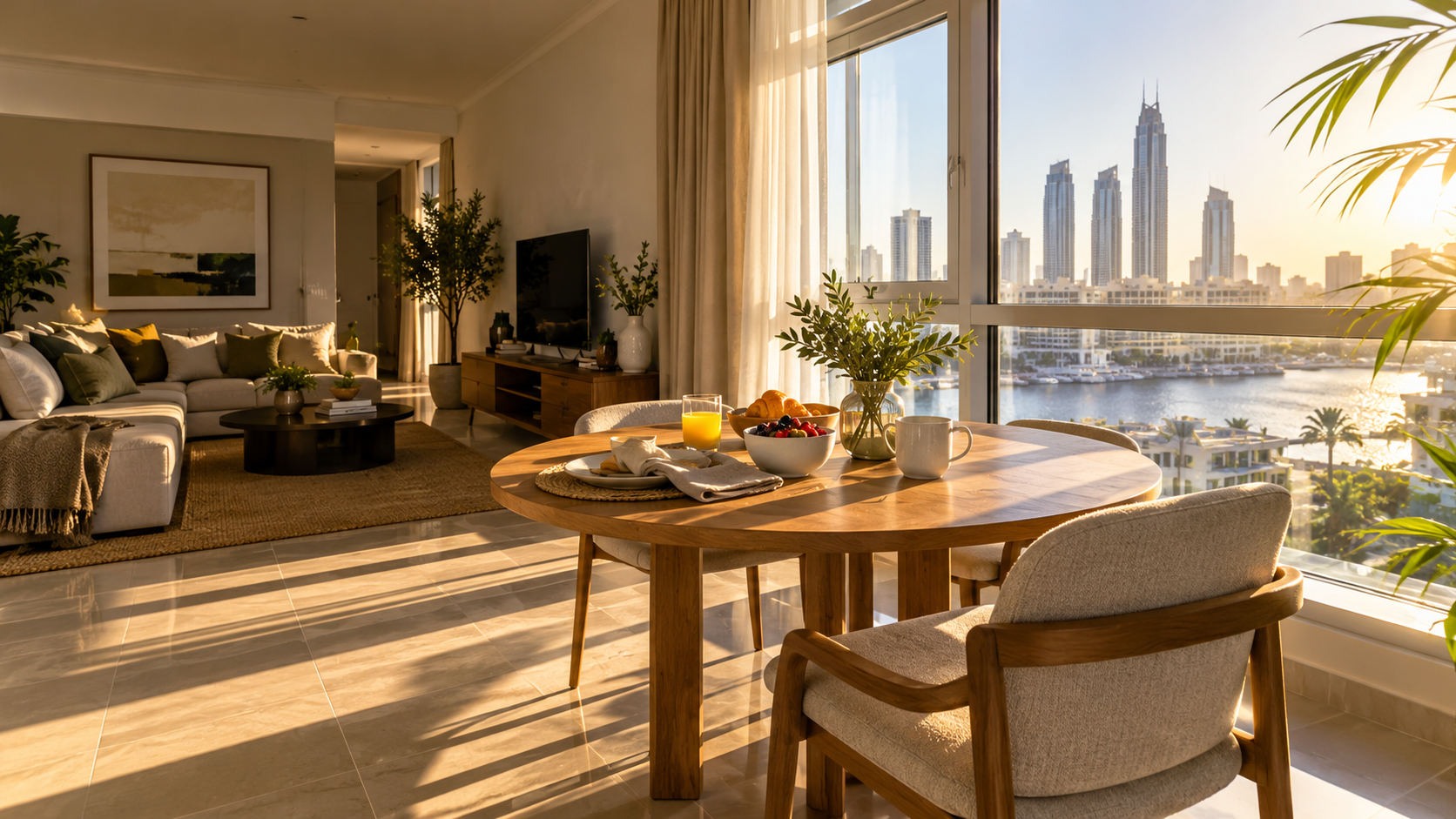
A sunlit living room can look wonderful in a photograph and still be awkward for an afternoon video call. A shaded bedroom can seem less dramatic during a viewing yet suit the person who sleeps there perfectly. Light is useful when it supports what happens in the room.
Orientation is one clue. The more revealing questions concern the window, the surrounding buildings, the shade and the time you will be at home. For a UAE apartment, use the floor plan to prepare your questions, then visit to see how those elements work together.
01Find the window direction on the correct plan
Ask for a plan that identifies the actual apartment, its floor and north direction. A mirrored layout, another stack or a marketing diagram without a north arrow can send the assessment in the wrong direction. Mark the windows in the rooms that matter most to you.
Then relate the drawing to what you can see. Identify the neighbouring building, balcony overhang and any projecting part of the facade. These can change the experience substantially, even between apartments facing roughly the same way.
Keep the distinction between orientation and observation clear. The drawing helps explain where light may come from. It does not establish how comfortable a chair beside the window will be at a particular hour. For plans received online, the digital floor-plan guide provides a useful first check on identity, dimensions and limitations.
02Separate daylight, direct sun and glare
These are related experiences, but they are not interchangeable. Ask whether you want a bright general atmosphere, a patch of direct sunshine or a clear view without reflections on a screen. A home can satisfy one of those aims better than another.
The US Department of Energy's daylighting overview explains that window placement and shading can provide natural light while controlling glare and unwanted heat. It also identifies east- and west-facing windows as more challenging for heat and glare control. That design principle is a reason to examine the actual room, not a universal ranking of UAE apartments.
During a viewing, sit at the likely desk and dining positions. Look towards the screen location and across the room. If the only comfortable arrangement requires the blinds to remain closed throughout your working day, decide whether that compromise still fits the reason you wanted large windows.
Swipe or use arrow keys to view all columns.
| Room and use | Observe during the visit | Follow-up question |
|---|---|---|
| Living room after work | Glare at the sofa and screen | Would adjustable shade preserve a useful view? |
| Bedroom for sleep | Light at the intended bed position | What covering is installed or permitted? |
| Desk for daytime work | Reflections and contrast | Can the desk move without blocking circulation? |
| Balcony for sitting | Shade at the intended hour | How might a different season change use? |
| Kitchen for preparation | Light on the work surface | Where is task lighting still needed? |
03Visit at a meaningful hour, then acknowledge the limits
An early viewing cannot answer every question about late-afternoon conditions. Ask for a second visit at a time relevant to your routine. If that is not possible, request dated photographs or a live video from the room, with the window coverings shown both open and in their normal position.
Record the date, time and weather alongside your impressions. A cloudy day and a clear day are different observations. Changes through the year also mean that a single visit should not become a claim about all seasons.
For an off-plan apartment, distinguish a visualisation from a daylight assessment. Ask whether the developer can provide orientation information, glazing specifications and details of permanent shading. Where light conditions are a decisive requirement, an appropriately qualified designer can assess the actual proposal. A bright render alone cannot settle the matter.
04Inspect the shade you can use every day
Look at the existing blinds or curtains as part of the apartment, including their controls, condition and effect on the room. Check whether they cover the intended area and whether furniture would prevent normal operation. Ask what is included in the transaction rather than assuming the displayed treatments remain.
Pacific Northwest National Laboratory's window-attachment guidance describes adjustable coverings as a way to manage daylight, glare and solar gain. Its research examples are not predictions of savings for a particular UAE home. Product choice, installation and how the covering is used still need to match the room.
If a change is needed, obtain permission where applicable and check suitability with the supplier. Do not assume exterior shading or window film can be added without approval or without affecting glazing warranties. Include a realistic quotation in your comparison instead of treating the solution as a free finishing touch.
05Read the glazing and cooling questions together
Ask for the window specification and the building's cooling arrangement. Large areas of glass tell you little about their performance without that information. A salesperson's description of premium glazing is not a substitute for the relevant product or building documents.
You do not need to turn a viewing into an engineering test. The practical aim is to identify which questions matter enough to investigate: uncomfortable heat beside a window, persistent glare at a desk or a room that feels different from the rest of the apartment. Describe the observation and ask the appropriate professional to assess its cause.
For running costs, use the district cooling and individual AC checklist. Orientation alone cannot predict a bill, and one previous occupant's usage should not be presented as your future cost.
06Choose the light that fits your routine
Return to the rooms in the order you use them. Someone who leaves early and returns late may value evening comfort differently from a person working at home. Household members can also disagree, so discuss the spaces each person relies on rather than selecting one direction for everyone.
Mark each concern as acceptable, solvable with a confirmed change or still unresolved. A manageable blind upgrade is different from a room that cannot accommodate the desk position you need. Keep those distinctions visible when comparing apartments.
The best result is not maximum sunlight at every moment. It is a home where the light, shade and arrangement let you work, rest and enjoy the view without constantly reorganising the day around the windows.
Sources
Research reviewed 30 October 2026. Publication dates and measurement periods are provided with each source.
- US Department of Energy: natural light and daylightingBuilding-science guidance checked 30 October 2026; no UAE performance forecast
- PNNL Building America: window attachments for solar controlTechnical guidance checked 30 October 2026; overseas study savings not applied to a UAE home
Property costs, ownership and contract terms vary by home. Speak with Aliyas about the details relevant to your search.