
Long term thinking • 5 min read
Looking Beyond Price: How to Recognise Quality in UAE Real Estate
Quality becomes clearer when you examine usable space, documented specifications, accessibility, condition and management. A finish or a high price cannot answer all those questions.
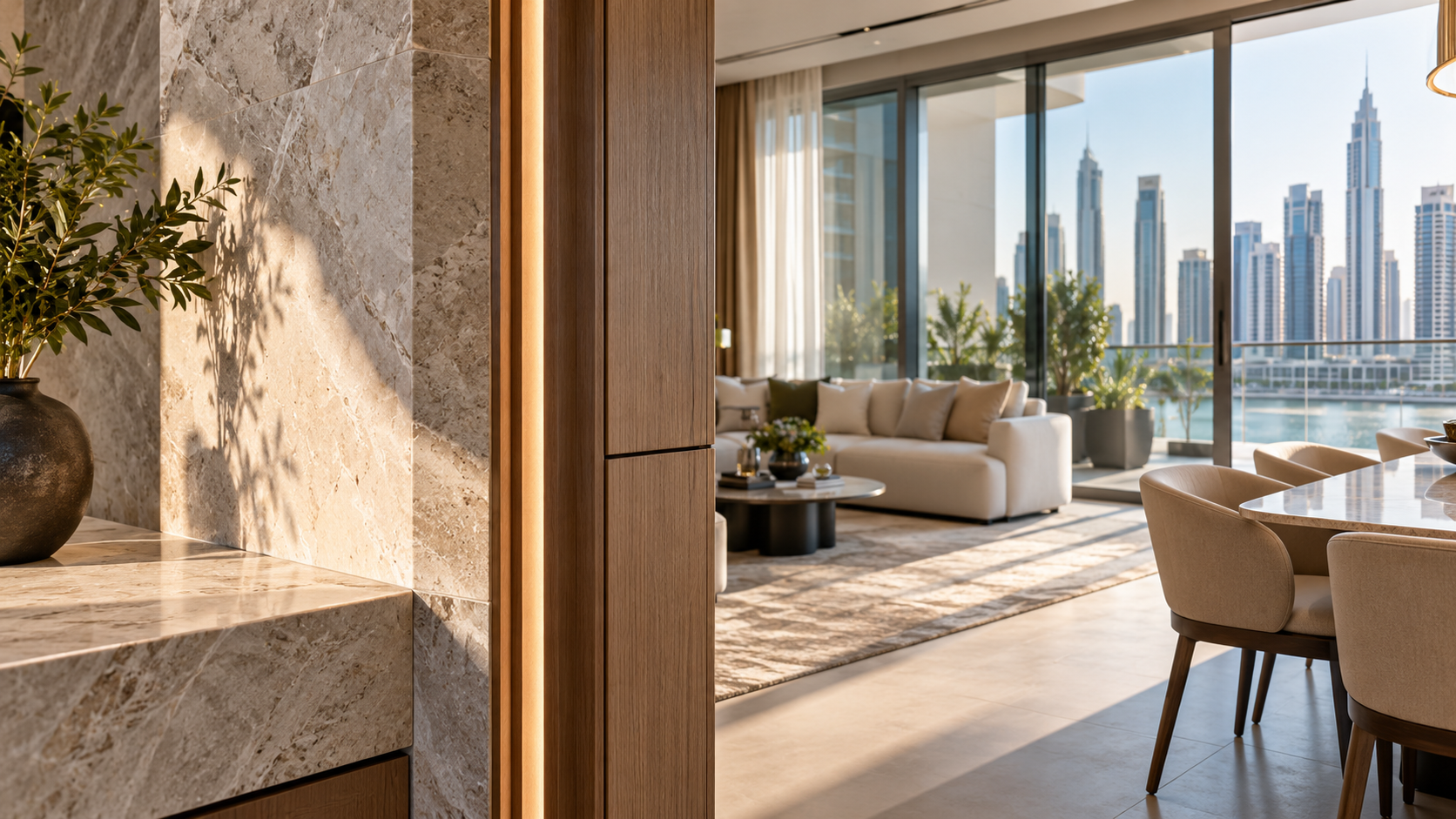
A beautiful entrance creates an immediate impression. The qualities that determine whether a home remains enjoyable are often less visible: a sensible layout, comfortable rooms, reliable systems, clear responsibilities and finishes that can be maintained without unnecessary difficulty.
Recognising quality means moving from an impression to evidence. That does not require every buyer to become an engineer. It requires knowing which questions a viewing can answer, which need documents and which deserve a qualified inspection. Price belongs in the assessment, but it should not be used as proof of quality by itself.
01Measure the space you can actually use
Start with the floor plan and the household's furniture, circulation and storage needs. A large quoted area can include space that contributes less to daily use, while a smaller plan can feel comfortable if rooms connect well. Compare the relevant area definitions before comparing a price per square foot.
Dubai Development Authority's third-party building survey service concerns verification of as-built building information through a registered surveyor. It illustrates the value of documented measurement; it does not replace checking the individual home against your own requirements.
Ask for the appropriate plans and clarify which version applies to the unit. Walk the route between the entrance, kitchen, bedrooms and bathrooms. Consider doors opening, chairs pulled out and storage in use. Quality includes being able to move through the home normally, rather than arranging daily life around avoidable obstacles.
02Read the specification behind the presentation
For an off-plan purchase, separate the sales image from the written specification and contract. Establish what is included, which details are indicative and how substitutions or changes are addressed. A branded appliance in a display apartment should not be assumed to form part of every unit's delivery.
For a completed home, inspect what is installed and obtain the relevant records. Ask about equipment age, warranties, service history and previous repairs. A recently repainted surface can improve appearance without explaining the condition of the systems behind it.
Record observations without diagnosing defects beyond your expertise. If there are concerns about moisture, structure, electrical installations or other technical matters, obtain appropriate professional advice. The purpose of a viewing is to notice and investigate, not to make an unsupported engineering conclusion from a photograph.
03Assess comfort and access as practical qualities
Visit at a useful time and pay attention to light, noise, temperature and privacy. Ask how the home performs at other times rather than assuming a brief viewing represents every season or operating condition. Consider neighbouring uses and the direction of the rooms you will occupy most.
Dubai Municipality's Wosool service assesses existing buildings against accessibility and universal-design criteria. If accessibility is important to the household, investigate the actual route and relevant evidence instead of relying on a general description that a building is accessible.
Check the journey from parking or drop-off through the entrance and lifts to the unit. Inside, consider thresholds, door clearances, bathroom use and future household needs. A home can be visually impressive while creating daily friction. The long-term living guide helps bring those changing needs into the decision.
Swipe or use arrow keys to view all columns.
| Dimension | What to examine | Evidence beyond appearance |
|---|---|---|
| Usable layout | Furniture, movement and storage | Applicable measured plans and a practical viewing |
| Specification | What is included and installed | Contract schedules, manuals and warranties |
| Condition | Visible concerns and recurring issues | Qualified inspection and repair history |
| Comfort and access | Light, noise, routes and controls | Relevant assessments and visits at useful times |
| Ongoing care | Maintenance access and responsibilities | Management records and realistic budgets |
04Look at maintenance before treating features as benefits
Every feature has an operating life and a responsibility attached to it. Ask who cleans, services, repairs and eventually replaces the relevant items. A complicated facade, extensive landscaping or specialist equipment may be appealing, but its care belongs in the ownership assessment.
Investigate whether routine maintenance can be carried out sensibly. Access panels, replacement parts, contractor access and understandable controls can matter more over time than an unusual finish. Obtain relevant technical guidance rather than assuming that expensive materials are always easier to maintain.
At building level, review the condition of shared spaces and the information available about planned work. The management and long-term value guide explains how records and responsibilities support a property after handover. Good presentation on a viewing day is useful evidence, but it is only one observation of an ongoing process.
05Compare homes with a consistent evidence standard
Use the same checklist for every shortlisted home. Otherwise, one property's attractive view can receive more attention than another's better layout or clearer documentation. Record what you have seen and the documents supplied, with a follow-up list for the remaining questions. Avoid treating missing information as a positive finding.
A simple written comparison is often more useful than an elaborate score. If you assign weights, explain why those priorities suit the household and do not imply the result is an objective market rating. Some requirements, such as workable access, may be essential rather than something another feature can compensate for.
Bring price back into the comparison after identifying the differences. Ask what the additional cost buys in terms of usable space, location, condition or documented features. A premium may be justified for your needs, but the explanation should be clearer than the claim that a more expensive home must be better.
06Turn the final inspection into a documented handover
Before accepting a completed property, understand the inspection and handover arrangements in the relevant agreement. Record issues clearly, with locations and supporting evidence where appropriate. Obtain professional assistance for technical assessments and clarify how outstanding matters will be handled.
Keep the final plans, manuals, warranties, access information and agreed records together. These documents support the next stage of ownership and make future repairs or changes easier to investigate. They also help distinguish what was delivered from what was merely discussed during the sale.
Quality is ultimately a combination of usable design, appropriate construction, condition and care. No single photograph or price tag can establish all of it. A careful buyer builds that picture from several kinds of evidence, then chooses the home whose strengths match the way it will actually be used.
Sources
Research reviewed 30 October 2026. Publication dates and measurement periods are provided with each source.
- Dubai Development Authority third-party building surveyOfficial service checked 30 October 2026; relevant jurisdiction and service scope only
- Dubai Municipality Wosool and Universal Design CodeOfficial accessibility assessment information checked 30 October 2026; no certification of any listed property
Property costs, ownership and contract terms vary by home. Speak with Aliyas about the details relevant to your search.