
Buildings & amenities • 5 min read
Lifts, Lobbies and Corridors: Building Details That Influence Daily Comfort
A beautiful lobby is only the beginning. Follow the everyday route through the building and ask how lifts, deliveries, maintenance and shared spaces actually work.
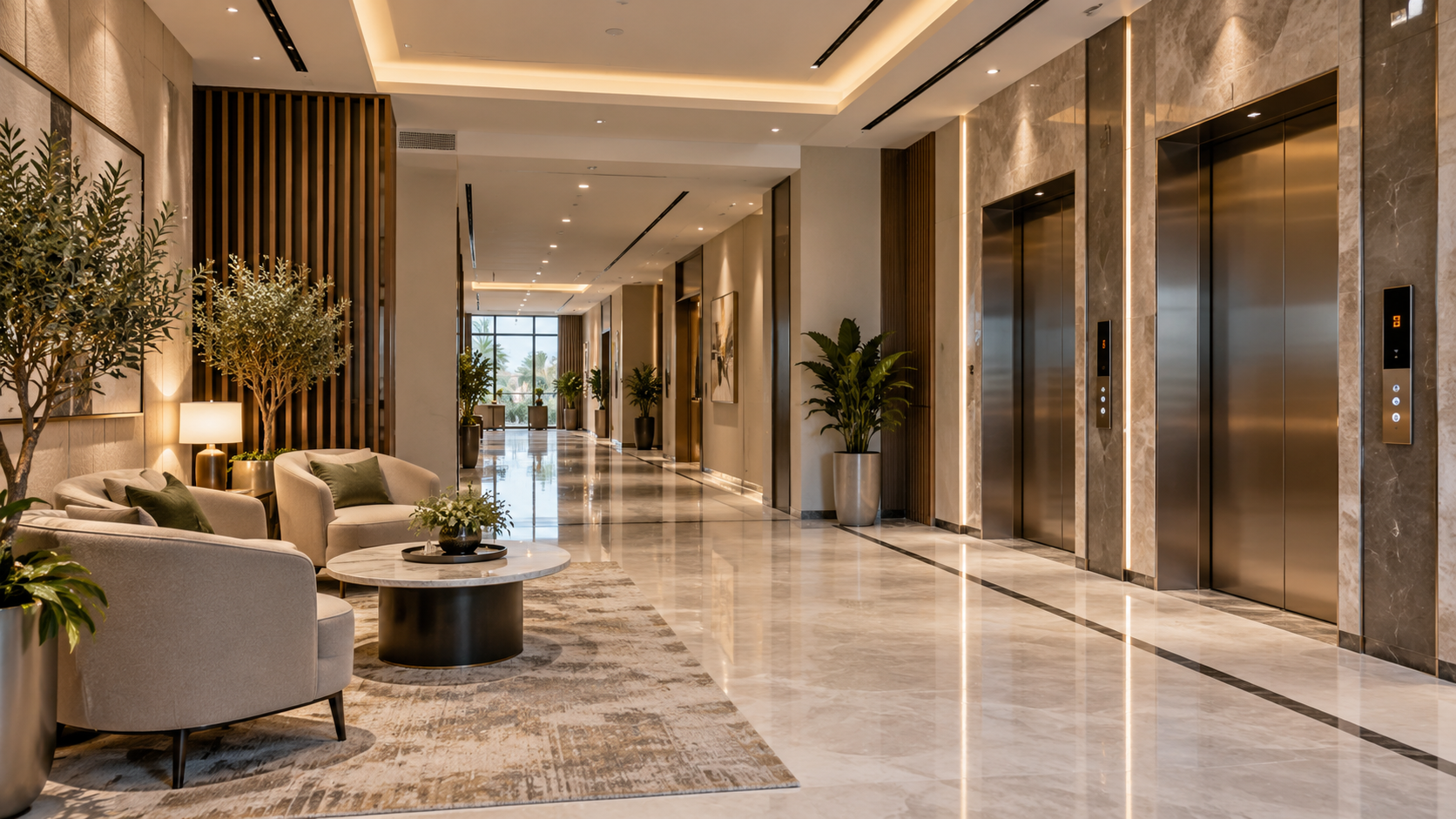
The lobby is where a building makes its first impression. The lift queue, corridor and delivery arrangements are where that impression meets everyday life. These spaces are easy to hurry through on the way to an apartment, even though you may use them several times a day.
Give the journey its own part of the viewing. Look for clear routes, workable access and evidence of attentive management. Expensive finishes can be pleasant, but they do not answer whether a visitor can find your door or whether returning with shopping will be straightforward.
01Start at the entrance you will use most
An impressive main entrance may not be the route you take after parking. Ask to see the normal resident approach and follow it all the way to the apartment. Note each access point, change of level and transfer between areas.
Try to picture an ordinary arrival: carrying bags, accompanying a visitor or returning with a stroller. Can you understand where to go? Is there a sensible place to pause without obstructing the route? If a household member has particular access needs, include them in the assessment where practical.
Use the parking checklist alongside this visit. A convenient bay and a convenient apartment do not necessarily create a convenient connection between them. The complete journey is what you will repeat, not the separate features in the brochure.
02Observe the lifts, then ask for context
Identify which lifts serve the apartment and parking levels, whether there is a service lift and how moving or delivery bookings are handled. Watch normal operation without obstructing residents or interfering with doors and controls.
KONE's residential guidance links lift planning and maintenance choices to the building and its use. That supports a more useful discussion than simply counting lift doors. Ask management about the service arrangement, how faults are reported and how residents are informed about planned downtime.
If possible, make a second authorised visit near a time you expect to travel. Write down the conditions: a quiet afternoon, school departure time or a delivery period. One quick trip is not evidence of consistently short waits, just as one unusual delay does not establish normal performance. Avoid turning a handful of observations into a supposedly precise building rating.
Swipe or use arrow keys to view all columns.
| Part of the route | What to notice | Question for management |
|---|---|---|
| Entrance | Clear wayfinding and usable access | How do residents and visitors enter? |
| Lift lobby | Normal movement and waiting conditions | What happens during maintenance? |
| Corridor | Lighting, doors and an unobstructed route | How are defects and obstructions reported? |
| Deliveries | Permitted drop-off and collection point | What can be left, and for how long? |
| Moving route | Access for large items | What booking and protection rules apply? |
03Walk the corridor at a normal pace
Notice whether the route is easy to understand and how the apartment entrance relates to neighbouring doors, service cupboards and common facilities. Listen to ordinary activity without assuming that what you hear on one visit is constant.
Observe lighting and the condition of visible finishes, but resist diagnosing hidden problems from appearance alone. A mark may need routine attention; a recurring leak or persistent smell needs a more specific explanation. Record the exact location and ask what has been investigated or scheduled.
Check practical details such as door swings and places where deliveries might accumulate. Do not treat a wide-looking corridor as permission for personal storage. The space needs to function for everyone using it, including residents whose movement or sight differs from your own.
04Ask how everyday exceptions are managed
Most days are simple. The revealing questions concern a lost access device, a delivery when you are out, a visiting relative or a large appliance arriving. Ask how each situation is handled and where residents obtain current instructions.
Find out whether there is an accessible alternative when a service relies on an app. A system should make sense to the people who will use it, including someone who does not carry a smartphone at all times. Confirm arrangements instead of assuming the concierge can make an exception on demand.
For a planned move, check the permitted loading location, lift booking, contractor access and any protection requirements. Obtain the rules before booking transport. A suitable apartment can still create a difficult moving day if the route for furniture has not been measured or the service arrangements have not been confirmed.
05Keep emergency routes separate from convenience
Ask management to explain the building's current emergency information, reporting contacts and arrangements for residents needing assistance. A viewing is not a fire-safety inspection, so do not infer compliance from a neat lobby or a visible exit sign.
Emaar's Rashid Yachts & Marina fire guidance specifically asks residents to keep common areas and escape routes free of stored items and report blocked paths or faulty fire doors. This is a useful example of why corridor space should not be counted as extra household storage. Follow the actual procedures for your building.
Do not test alarms, restricted doors or safety systems yourself. If something concerns you, describe it to management and obtain appropriate follow-up. Convenience features and emergency arrangements have different purposes, and both deserve clear answers before a household depends on them.
06Look for a management process you can understand
Ask where residents report a fault and how they receive updates. A clear ticket or contact process is easier to assess than an assurance that everything is always dealt with immediately. Where available, review relevant resident notices and the explanation of planned work.
Judge the response to your questions as well as the finishes. Specific answers, written procedures and a willingness to identify unresolved matters are useful. Vague promises do not become more reliable because the building is new or the lobby is luxurious.
Finally, consider these spaces alongside the amenities you will actually use. A modest but well-organised route home may contribute more to daily comfort than an additional facility you rarely visit. Give that ordinary convenience its proper weight in the decision.
Sources
Research reviewed 30 October 2026. Publication dates and measurement periods are provided with each source.
- KONE UAE: residential lift planning and maintenance considerationsManufacturer guidance checked 30 October 2026; no lift performance or waiting-time standard inferred
- Emaar: Rashid Yachts & Marina fire procedures and shared routesCommunity-specific guidance checked 30 October 2026; not a compliance assessment
Property costs, ownership and contract terms vary by home. Speak with Aliyas about the details relevant to your search.