
Buildings & amenities • 5 min read
Storage Rooms, Laundry Areas and Service Spaces: The Overlooked Parts of a Great Home
Follow laundry, shopping and household equipment through the floor plan. Well-placed storage and service space can make a home easier to live in without adding another showpiece room.
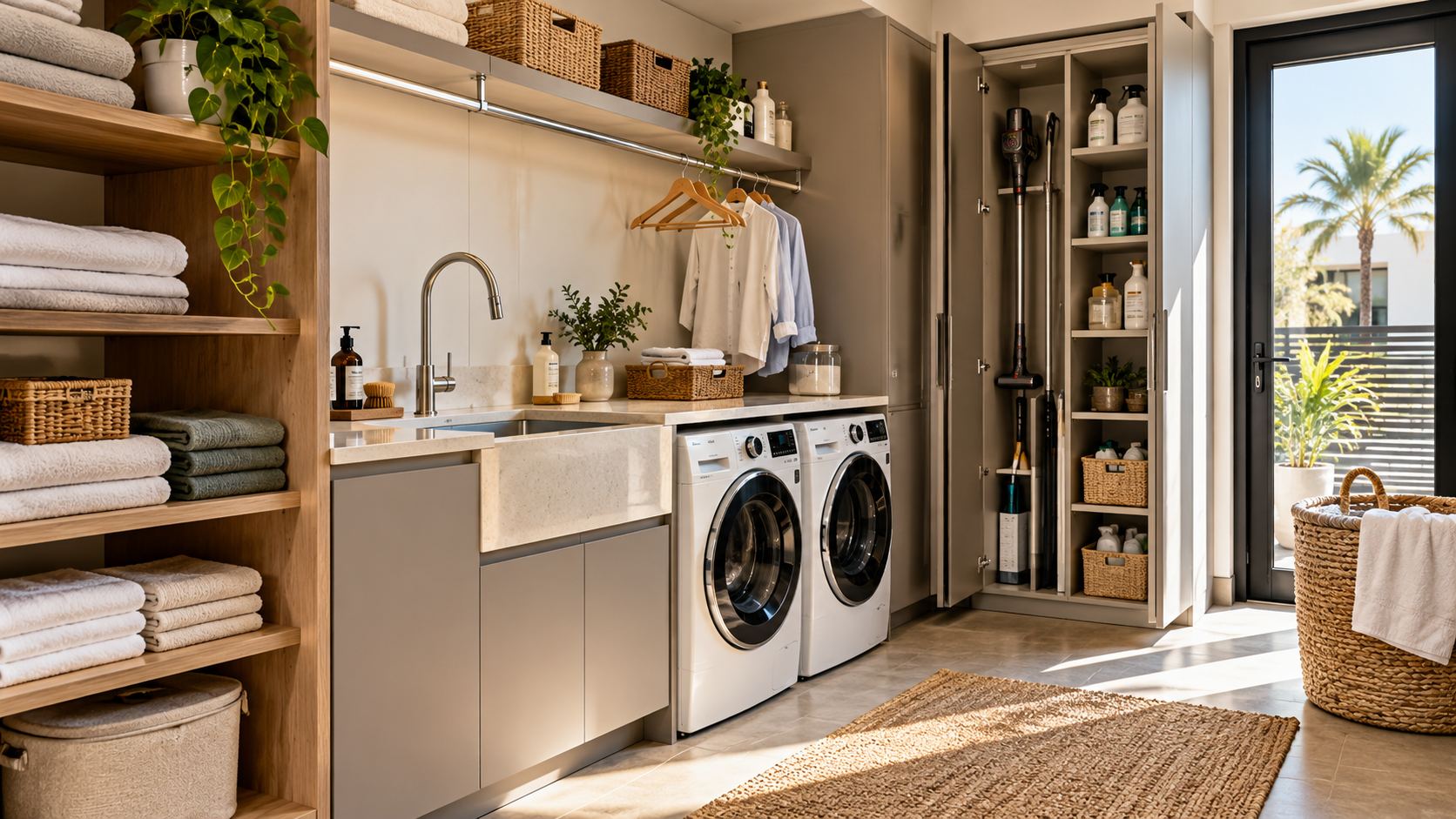
The living room is ready for photographs. The vacuum cleaner is behind a bedroom door, the drying rack is beside the dining table and the suitcase has no obvious place at all. These details rarely lead a property tour, but they can decide how orderly a home feels after the first month.
Assess storage and service spaces by following the tasks they support. Where do belongings arrive, where are they used and where do they return? A cupboard is valuable when it answers those questions, not merely because it appears on the plan.
01Begin with the belongings that need a home
List the larger or awkward items you expect to keep: luggage, cleaning equipment, sports gear, folded bedding, a stroller or seasonal decorations. Include things you use daily and things you retrieve only occasionally. They need different kinds of access.
During the viewing, identify a realistic place for each category. Check cupboard depth, shelves, doors and the route to the item. A tall compartment can be useful for a vacuum, while a deep shelf may make small daily supplies difficult to find.
Do not assume the household will simply own less after moving. Decide what will actually be kept, donated or replaced before relying on a smaller storage provision. The apartment storage guide offers ways to organise that inventory without filling every room with additional furniture.
02Follow a complete laundry cycle
Start where used clothing collects, then follow the route to sorting, washing, drying, folding and putting it away. Check whether those tasks can happen without blocking the kitchen, bathroom or the only route through the room.
Look at the appliance space in its working condition. Allow for opening the door, loading and unloading, and the installation and service clearances required by the exact manufacturer. A machine's cabinet dimensions alone do not establish that it can be installed and maintained in the available opening.
If you expect to stack appliances, verify the specific models and approved arrangement. Bosch's stacking guide requires compatible equipment and a suitable stacking kit, with professional installation recommended. Its UK model list should not be assumed to cover every UAE appliance. Confirm compatibility and installation instructions with the local supplier for your actual units.
Swipe or use arrow keys to view all columns.
| Task | Space to inspect | Question before committing |
|---|---|---|
| Laundry | Machine opening and handling space | Can the exact appliances be installed and serviced? |
| Cleaning | Equipment and product storage | Can items be reached without blocking circulation? |
| Shopping | Route from entrance to storage | Where do bags and bulk items go? |
| Seasonal storage | Accessible cupboard or store | What fits, and how will it be retrieved? |
| Maintenance | Panels, valves and equipment access | What must remain clear for authorised servicing? |
03Check the drying and folding plan
Decide how the household normally dries clothes and whether the home supports that method within the applicable rules. Ask about any restrictions on visible balcony drying rather than assuming outdoor space can be used freely.
If a dryer is planned, review the exact model's installation requirements with the appropriate supplier or professional. Different equipment can require different arrangements. Do not infer ventilation, drainage or electrical suitability from an empty cupboard or an available socket.
Consider where clean clothes will go while they are folded and sorted. This need not mean a dedicated laundry room. A workable surface and a place for a basket may be enough, provided the routine does not permanently take over a space needed for another activity. Test the sequence on the plan rather than deciding from the room label.
04Keep useful storage separate from service access
Ask which panels, cupboards and openings provide access to building or apartment equipment. Do not count those areas as general storage unless the responsible professional confirms what is permitted. Filling a convenient-looking space can make maintenance difficult or interfere with safe operation.
For ordinary furniture, follow the product's installation instructions. IKEA's furniture-stability guidance stresses securing applicable storage furniture to the wall. Check the appropriate fixing method, wall conditions and any required permission rather than treating anchoring as an optional finishing detail.
Store household products according to their labels and the needs of the people living there. Keep the practical distinction between food, clothing, cleaning supplies and equipment. A storage plan should help the household retrieve things safely, not simply hide everything from view.
05Understand what a separate store room includes
If a listing mentions a store room, inspect it and confirm its location, dimensions, access and permitted use. Establish whether it is part of the unit, separately allocated or subject to another arrangement. Resolve the documentation with the relevant professional where needed.
Ask about conditions and suitability for the items you intend to keep there. A remote store may suit infrequent luggage but be inconvenient for something used every morning. Do not assume a space is suitable for sleeping, working or another purpose merely because a bed or desk could fit inside it.
For off-plan homes, request the plans, specifications and expected delivery details. A label on a marketing plan does not settle shelving, services, climate conditions or access rights. Keep those questions visible in the comparison instead of assigning the space a use it may not support.
06Choose a layout that can absorb an ordinary busy day
Imagine arriving with shopping while laundry is running and someone else needs the kitchen. Where can bags be put down? Can doors still open? Does the drying arrangement interfere with dinner? This small exercise can expose problems that an empty, carefully staged apartment conceals.
Compare the findings with the usable-layout guide. More area is helpful only when it can support the tasks that matter. A compact but well-placed utility cupboard may serve the household better than a larger room at the wrong end of the home.
Write down what works as supplied and what would require a confirmed alteration or purchase. Include those practical costs and permissions in the decision. The most successful service spaces are often the least noticeable ones: they give everyday belongings and tasks somewhere sensible to go, leaving the rest of the home easier to enjoy.
Sources
Research reviewed 30 October 2026. Publication dates and measurement periods are provided with each source.
- Bosch: stacking-kit compatibility and installation guidanceManufacturer UK guidance checked 30 October 2026; verify exact UAE models with the local supplier
- IKEA: storage-furniture stability and wall anchoringManufacturer safety guidance checked 30 October 2026; follow the exact product instructions
Property costs, ownership and contract terms vary by home. Speak with Aliyas about the details relevant to your search.